.png)
.svg)

Color-coded timelines feel organised. But they can become maintenance overhead. Here’s when Gantt charts help — and when they hinder.
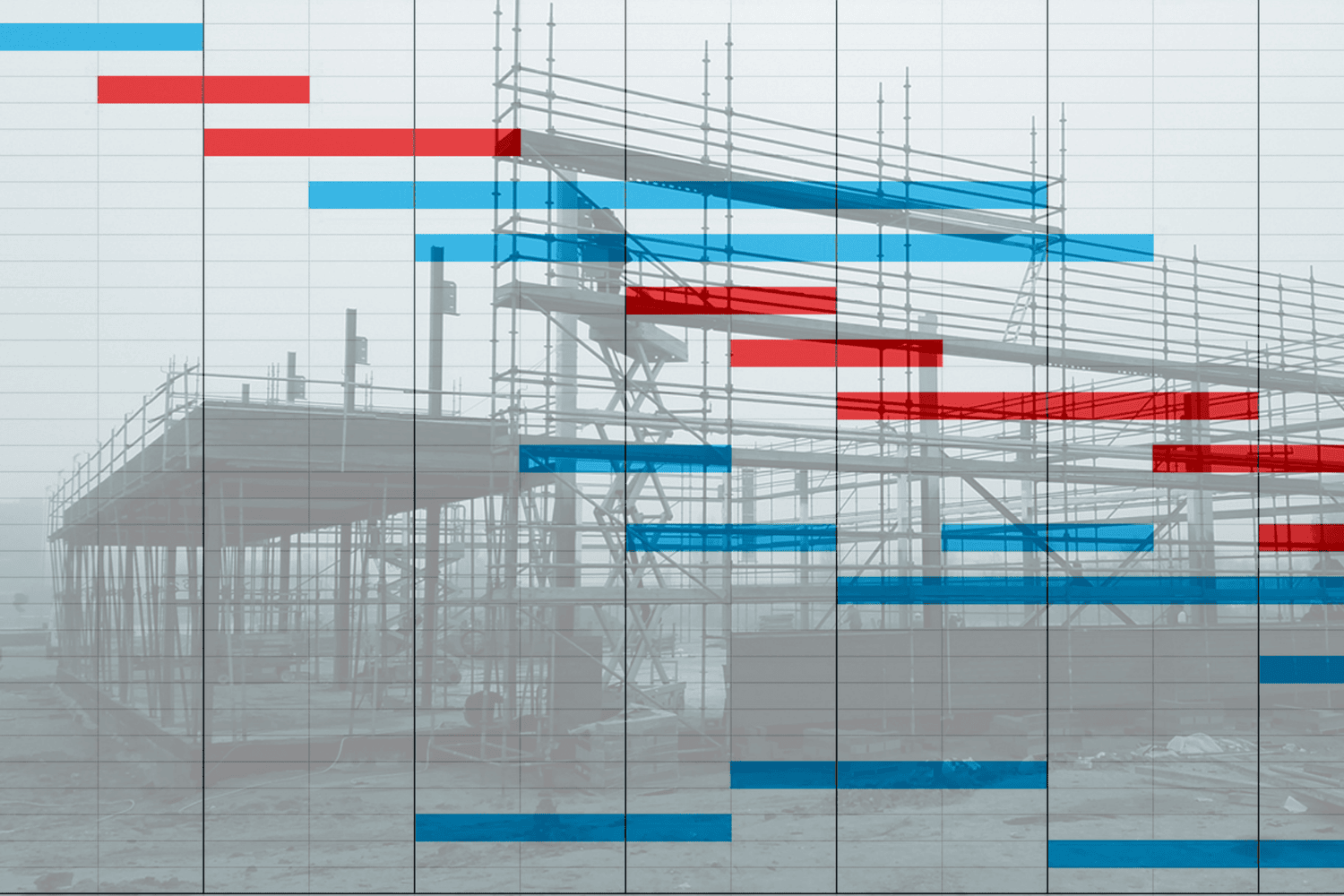
Let’s be honest for a second.
Somewhere along the way, Gantt charts became the symbol of “serious” project management. If you don’t have one, are you even managing a project?
But here’s the uncomfortable question most teams don’t ask:
Is your Gantt chart actually helping you — or just making you feel organized?
Because those are not the same thing.
Gantt charts look impressive. Color-coded bars. Dependencies. Timelines. Arrows everywhere. It feels structured. Controlled. Professional.
But once a project reaches any real level of complexity, that clean visual turns into:
And suddenly, the chart becomes something only the project manager understands. Everyone else? They nod politely and ignore it.
If your team isn’t actively using the Gantt chart to make decisions, then it’s not a management tool. It’s decoration.
Here’s what Gantt charts quietly encourage:
Real projects rarely behave that way.
Clients change scope. Vendors delay. Teams discover unknowns. Priorities shift.
Yet the Gantt chart sits there — frozen in time — suggesting everything is still on track.
And the more complex the project, the more maintenance the chart requires. Updating dependencies becomes a job in itself. At some point, you're managing the chart instead of managing the project.
That’s a red flag.
This isn’t an attack on Gantt charts. They have their place.
They’re useful when:
In those environments, a timeline view can provide clarity.
But in fast-moving environments — marketing, product development, software, creative work — they often become more rigid than helpful.
The best teams don’t obsess over timelines. They obsess over clarity.
Clarity around:
That’s it.
Often, a simple task board, priority list, or dashboard creates more visibility than a 40-layer Gantt chart ever could.
Why?
Because it reflects reality, not theory.
Instead of defaulting to a Gantt chart because “that’s how projects are done,” ask this:
If the answer is no, it’s okay to choose a different tool.
Project management isn’t about looking structured.
It’s about delivering outcomes.
A Gantt chart can be useful.
But it’s not sacred.
And if your team feels constrained, confused, or constantly reworking timelines, the issue might not be execution.
It might be the tool.
The smartest project leaders aren’t loyal to formats.
They’re loyal to results.

Facilitating decisions advances delivery. Booking calendars consumes it. Explore how protecting PM bandwidth strengthens project performance.
Daily standups and sprint rituals don’t create agility. When leadership rewards control over learning, Agile becomes theater. Here’s what’s breaking it.
Dashboards, updates, stakeholder requests — not all information moves a project forward. Here’s how PMs filter noise and concentrate attention.
As generative AI automates routine Project Management tasks, a new question emerges: does this commoditize the profession or elevate it?

Incomplete inputs, conflicting systems, late submissions — data rarely behaves as planned. Discover strategies PMs use to protect delivery.
.png)
Polished AI responses can obscure errors and drift from project intent. Discover safeguards to ensure accuracy, accountability, and strategic alignment.


.svg)